
Indian benchmark indices, Sensex and Nifty, experienced declines in early trade due to a surge in crude oil prices and significant selling pressure on bank stocks, impacting overall investor sentiment. Track Sensex, Nifty on July 22.

Indian benchmark indices, Sensex and Nifty, experienced a sharp decline at the close of trade, with the Sensex dropping 539 points and the Nifty falling below 24,100, primarily due to selling pressure in HDFC Bank and ongoing geopolitical uncertainties.

The combined market valuation of four of India's top-10 most valued firms eroded by Rs 87,960.29 crore last week, with Bharti Airtel experiencing the largest decline, amidst a bearish trend in the equities market.

Indian equity benchmark indices Sensex and Nifty rebounded sharply in early trade, with the Sensex jumping over 530 points, tracking a broad-based rally in Asian markets after four consecutive days of decline.

Indian benchmark indices Sensex and Nifty saw a sharp rebound in early trade, driven primarily by a rally in IT stocks and a decline in crude oil prices, even as global markets faced selling pressure due to US inflation concerns. Track Sensex and Nifty on

Indian benchmark indices Sensex and Nifty saw a significant rebound in early trade, with the Sensex surging over 700 points, driven by a decline in crude oil prices, easing concerns over Federal Reserve tightening, and the appointment of Anup Bagchi as the new MD and CEO of HDFC Bank.

Indian stock markets closed lower, with the Sensex falling 429 points, after the Reserve Bank of India raised its benchmark interest rate for the first time in nearly four years, coupled with rising crude oil prices and persistent foreign fund outflows.

Indian benchmark stock indices, Sensex and Nifty, closed lower due to profit-taking, a spike in wholesale price-based inflation, and firm crude oil prices, despite some support from easing intraday crude oil prices and rupee appreciation.

The combined market valuation of five of India's top-10 most valued firms eroded by Rs 1 lakh crore last week, with IT giant Tata Consultancy Services (TCS) experiencing the largest decline amidst a bearish trend in domestic equities.

Indian benchmark indices Sensex and Nifty rebounded in early trade after two days of losses, driven by easing crude oil prices and strong buying in blue-chip IT stocks, despite continued global uncertainties. Track Sensex, Nifty on September 30.
Indian benchmark indices Sensex and Nifty tumbled nearly 1 per cent for the third consecutive day, driven by a sharp spike in crude oil prices and significant selling in bank stocks, with Brent crude jumping to USD 95.27 per barrel.

ICICI Bank delivered satisfactory results in the second quarter of 2025-26 (Q2FY26), sustaining return on assets (RoA) of around 2.3-2.4 per cent and improving asset quality. Provisions declined 26 per cent year-on-year (Y-o-Y) and 50 per cent quarter-on-quarter (Q-o-Q).

Indian benchmark indices Sensex and Nifty extended their losses for a third consecutive day, driven by firm crude oil prices, elevated global bond yields, and significant foreign fund outflows, making investors cautious.

HDFC Bank's share in active mutual fund schemes has fallen to multi-year lows, despite overall MF ownership in the bank rising, as the stock faces weak performance, soft margins, and governance concerns.
Indian benchmark indices Sensex and Nifty extended their winning streak to a fourth consecutive day, driven by strong buying in blue-chip bank stocks and a decline in global crude oil prices. Fresh foreign fund inflows also contributed to the optimistic sentiment in the domestic equity market.

Potential external candidates include Anup Bagchi, Rajiv Sabharwal and CSB Bank's Pralay Mondal.

A bank employee in Lucknow allegedly shot dead his wife and sister before taking his own life, reportedly due to marital discord. The incident involved shootings outside an ICICI Bank branch and at his home, with the accused posting a WhatsApp status alleging 'betrayal' by his wife.

From the Sensex basket, Power Grid, IndusInd Bank, Tata Motors, JSW Steel, NTPC, HCL Technologies, Tata Steel, ICICI Bank, Mahindra & Mahindra, Axis Bank, HDFC Bank and Reliance Industries were among the major laggards. Among the gainers, Hindustan Unilever climbed over 5 per cent. Tech Mahindra, Nestle, ITC, Wipro, Tata Consultancy Services and Kotak Mahindra Bank were the other major gainers.

Indian banks anticipate a reduction of up to 50 basis points in their funding costs due to a surge in liquidity from robust Foreign Currency Non-Resident (Bank), or FCNR (B), flows, lessening their reliance on more expensive certificates of deposit (CDs).

Indian benchmark stock indices, Sensex and Nifty, rebounded on Friday, driven by value buying in banking, oil & gas, and auto shares following recent sharp losses. The Sensex climbed 315.20 points to settle at 73,895.74, while the Nifty rose 77.40 points to 23,140.50.
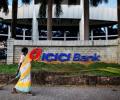
An in-line ICICI Bank result for the quarter ended March 31, 2024, has led to analysts raising target price and earnings per share (EPS) forecast on the stock. ICICI Bank, they said, appeared least vulnerable to regulatory action on its digital offerings or for risk monitoring lapses.

The Allahabad High Court has ruled that investigating agencies cannot impose a blanket debit freeze on a person's bank account during cybercrime investigations. The court stated that restraint must be proportionate to the suspected proceeds of crime, directing banks to de-freeze accounts beyond the disputed amount. This ruling aims to protect innocent account holders from complete financial deprivation due to minor disputed transactions.
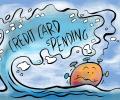
Credit card spending in India has consistently topped Rs 2 trillion for three consecutive months, with July 2026 recording Rs 2.08 trillion, indicating a new normal for consumer expenditure, according to the latest RBI data.

Indian benchmark indices, Sensex and Nifty, experienced a significant drop in early trade, with the Sensex falling over 600 points, primarily due to crude oil prices surging past the USD 100 per barrel mark and weak global market trends. Track Sensex, Nifty on September 24.

The RBI on Monday said state-owned SBI, along with private sector lenders ICICI Bank and HDFC Bank continue to be Domestic Systemically Important Banks (D-SIBs) or institutions which are 'too big to fail'. SIBs are perceived as banks that are 'too big to fail (TBTF)'. This perception of TBTF creates an expectation of government support for these lenders in times of distress.

From the Sensex pack, Asian Paints, UltraTech Cement, Power Grid, ICICI Bank, Reliance Industries, Hindustan Unilever, Bharat Electronics and Sun Pharma were among the major gainers. In contrast, Trent, Eternal, Axis Bank and Titan were among the laggards.

The Nifty 50 experienced significant volatility during its closing auction session, leading to losses for both long and short retail options traders due to thin liquidity and rapid price swings, particularly in private-sector banks.

Indian benchmark indices Sensex and Nifty ended flat on Tuesday, with the Sensex dipping nearly 70 points, as investor sentiment turned cautious ahead of crucial global central bank policy meetings and a significant sell-off in Asian markets.

Indian stock markets this week will be primarily influenced by a series of corporate Q1 earnings, the evolving geopolitical situation in West Asia, and fluctuations in crude oil prices, according to market analysts.
Defying the bearish sentiment in the markets on Monday, ICICI Bank's share price rose by 2 per cent, reaching an intraday high of Rs 1,234.4 per share on the BSE. With a 1.5 per cent gain at the close, the stock emerged as the top performer on both the BSE Sensex and the National Stock Exchange Nifty 50 indices.

The RBI on Tuesday said state-owned SBI, along with private sector lenders ICICI Bank and HDFC Bank continue to be Domestic Systemically Important Banks (D-SIBs) or institutions which are 'too big to fail'. SIBs are perceived as banks that are 'too big to fail (TBTF)'. This perception of TBTF creates an expectation of government support for these banks in times of distress. Due to this perception, these lenders enjoy certain advantages in the funding markets.

Indian stock market indices closed on a mixed note, with the Sensex gaining 374 points driven by buying in Reliance Industries and ICICI Bank, while the Nifty remained flat. This divergence is attributed to a new Closing Auction Session (CAS) mechanism introduced by stock exchanges, impacting market liquidity and price discovery.

Indian benchmark indices, Sensex and Nifty, closed nearly flat on Thursday, influenced by the US Federal Reserve's interest rate hike and indications of further monetary tightening. Despite some intraday gains, caution prevailed, with foreign institutional investors continuing to offload equities. Meanwhile, the National Stock Exchange of India's (NSE) mega initial public offering opened for subscription, garnering 39 per cent subscription on its first day.
Indian benchmark equity indices, Sensex and Nifty, rebounded nearly 1 per cent, with the Sensex jumping 790.54 points to 76,991.22, driven by softening crude oil prices and strong buying in banking, financial, and IT shares.
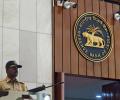
The Reserve Bank of India (RBI) on Wednesday said it has imposed a penalty of Rs 1.8 crore on Punjab National Bank and Rs 30 lakh on ICICI Bank for deficiencies in regulatory compliance. In a statement, the RBI said the Statutory Inspection for Supervisory Evaluation (ISE) of Punjab National Bank (PNB) was conducted by it with reference to its financial position as of March 31, 2019. Following the ISE and examination of other documents, the RBI found contravention of its provisions relating to the pledge of shares by the PNB.

The asymmetry in deposit and credit growth is the biggest challenge before the Indian banking industry. For every 100 deposit that a bank mobilises, it needs to keep 3 with the banking regulator in the form of cash reserve ratio on which it doesn't earn any interest. Another 18 is used for buying government bonds (statutory liquidity ratio). This means, a bank is left with 79 for giving credit. Add to this, its capital which can be used for giving loans. Most banks are facing a fund crunch. They need to find ways to attract deposits if they want to sustain credit growth, explains Tamal Bandyopadhyay.

JK Udaipur Udyog Ltd said Jodhpur High Court restrained ICICI Bank from initiating any action against the company. ICICI Bank had demanded Rs 70.28 cr from the company.

Among the 30 Sensex companies, JSW Steel, Tata Steel, Axis Bank, Reliance Industries, ICICI Bank, Hindustan Unilever, Kotak Mahindra Bank and Asian Paints were among the biggest gainers. In contrast, Mahindra & Mahindra, Sun Pharma, NTPC, Wipro, State Bank of India and Power Grid were among the laggards.

Indian stock market benchmark indices closed higher, driven by strong performance in blue-chip bank shares and a positive trend in global markets, with hopes of progress in US-Iran peace negotiations also contributing to optimism.
ICICI Bank, the second-largest private sector lender and state-owned Indian Bank on Monday raised their lending rates across all tenors in anticipation of a rate hike by the RBI later this week. The rates have been increased across all tenors under the marginal cost of funds-based lending rate (MCLR) system, a move that will make EMIs expensive for those who availed loans benchmarked against the MCLR. Under the revised rates, effective August 1, ICICI Bank's one-year MCLR has increased by 15 basis points or 0.15 per cent to 7.90 per cent, while the overnight MCLR rose to 7.65 per cent, as per information posted on the bank's website.
